WARNING. This page we know is the most popular of all the website, presumably from people who are thinking of getting their first Basset Hound. A well bred, sound Basset will cost around £1500 and upwards Those you used to see for sale on the web at £500 or so are almost certainly from a puppy farm: see the BBC programme on May 16th 2016 to see in what conditions some are bred. DON'T fall in love and buy just because they look cute. You may be buying into a whole load of heartache and vet's bills.
(This page revised and updated September 19th 2023) |
Bassets are different. There are many sources of information on how to successfully rear a puppy, but sadly since our publicity, many new owners have approached us for advice. They seem to have been let down by their breeder. So in the interests of passing on some advice gleaned from our long ownership, here are some quick hints.
You best source of advice is to buy Marianne Nixon's book The Basset Hound. With her late husband Jim they used to run the well known Brackenacre kennel at Plymouth (we have had two of their lovely hounds). For other books see our links page. (And for a suggested diet sheet I have copied two pages from Marianne's book here, pdf + see below). Or a more recent one for our current Harmony's breeder (Laurelee Bassets) here.
There is also a Care Page on the main Basset Hound Club's website.
But for now, some Do's and Don'ts.
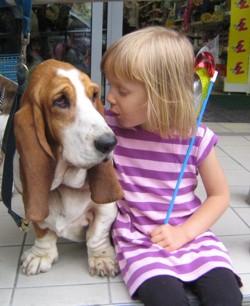
- Providing you buy from a good breeder with known pedigree (the hound not the breeder), you should have little trouble with your hound. They do need plenty of exercise and mixing with other dogs and people. Bassets are very sociable, affectionate and loving. They are particularly safe with children (see our Miss Moppet right with Greta our g-child). And a short YouTube video here (Baby bites Basset Hound). They need firm handling but like small children can sulk. It is easy to tell when they have done wrong.
- Bassets are heavy boned dogs. We now feed our puppies on Fish4Dogs puppy food that while not cheap at around £30 for 6kgs - a month's supply - does make life simpler. This avoids giving additional calcium supplement - say Canovel tablets. We also used to feed extra vitamins (SA 37). Some also give Rose Hip syrup (allegedly to improve the coat) and cod liver oil (Seven Seas), but this may not be necessary. Bassets should be “well-covered” without being fat.
- Because of heavy bone growth care must be taken to avoid climbing on and off furniture, stairs, cars – or in our case – jumping through a serving hatch (at six months!). Always lift under the chest. It is easy to damage a joint which may not have closed properly. A few years ago one of our hounds developed a limp at six months which after X-Ray and consultation at Langford Veterinary School (not cheap), proved to be a socket joint that had not closed properly. The surgeon offered to operate, with no guarantee, but she walked 12 mile a day for most of her life, but with a rolling gait.
- For the same reason walks should be restricted to runs around the garden till six months, half a mile up to 9 months. Don’t walk more than a mile till a year old. From 18 months old a fit hound should be able to walk more than 12 miles a day with no trouble.
- Never exercise less than an hour after meals due to the risk of bloat. Like other big chested dogs, the stomach can twist (torsion gut) trapping gases which can blow up like a balloon. The hound dies through pressure on the heart. Greedy dogs are particularly susceptible. Symptoms are coughing and inability to swallow. Later stages are unmistakable: the dog will blow up like a tight balloon. You MUST get the hound to a vet within the hour. He will pierce the throat with a tube to relieve gas pressure (we have lost two hounds in this way, both in the middle of the night). Never feed just one meal a day: split into two. Dry food is probably more suspect as it swells in the stomach, but that’s not a reason not to use it, just be aware.
-
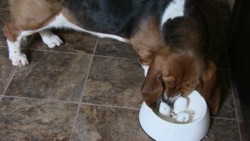
Greedy feeders. Many Bassets are. Currently our Melody would take the world record for fast eating, but we have bought an "anti-gulp" bowl (see below) which does seem to slow her down. Eating too fast can bring all sorts of problems from belching and being sick to possibly bloat.
- Ears. Weekly look at ears by cleaning with cotton wool and ear drops. Some dogs generate a lot of wax, some very little. Alternatively buy two hounds and they may wash each others. (our two do). In fact two are always better than one: Bassets are very sociable and will sleep and play together.
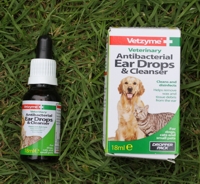
We have found that Vetzyme is the most effective (see below). Otodex is everywhere but not as good in our experience, and easier to apply. Not widely available in pet stores but listed on eBay around £4. Lasts for ages.
 If your hound's ears get too bad it may develop an infection, which can be difficult to cure, and expensive. We have used an aqueous ear flush called TrizAural which worked extremely well in quite clearing one of our hound's ears of solid wax. While our vet charged us £47, we found we can buy it for £18 (plus post) from several of Pet Meds on-line suppliers. No prescription is required. If your hound's ears get too bad it may develop an infection, which can be difficult to cure, and expensive. We have used an aqueous ear flush called TrizAural which worked extremely well in quite clearing one of our hound's ears of solid wax. While our vet charged us £47, we found we can buy it for £18 (plus post) from several of Pet Meds on-line suppliers. No prescription is required.
- Nails: if regular road walking they may not need much clipping, except for the dew claw (if left on). This can be a problem with some hounds. We have had some that will let you do anything, others will struggle as if you’re going to amputate. If you’ve got one of those, smother with an old coat, sit on top, leaving one paw outside. Use sharp side-clippers (the ones vets use). A muzzel may be required. It’s not a pleasant job.
- Bitches if not spayed can be prone to pyometra. They will start drinking a lot and look for a vulva discharge. See your vet immediately for an op. (And see 21 below).
- At least weekly comb with metal rake and brush. Use hand massage to bring out a shine. Watch for ticks in the summer. Use a special tick tweezer off eBay.
-
Eczema has become a problem with the growing fashion for increasing folds of skin. This is particularly so under the chin in summer. With previous hounds we have tried various remedies including the cheap simple one of Tetmosol (sulphur) soap. This has always worked with our hounds extremely well. It's cheap and avoids a vet's bill. It may not be a complete cure, but it has always improved the skin. Till recently this has not been available in the UK since ICI stopped making it here – we have bought it from friends in Kathmandu – but I am pleased to say that it now appears on eBay, made it would appear in Nigeria, but available from UK sellers. Just lather it in and leave to dry. Your vet will probably sell you Malaseb, or try leaving a sulphur stick in the water bowl. (We used to know a vet who sat on the UK committee for eczema: he said he knew he'd be on it for life).

- Mange can be a real problem to get rid of. Robert and Rosemary Goodden's lovely and large Blackberry suffered for some time enduring conventional veterinary treatments but the cure was found by using a herbal treatment,
Flora Pet Naturals "Mange Treatment Formula"
obtainable from the US of A.
-
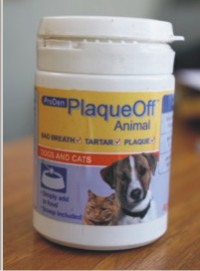
Teeth. Chewing marrow bones is good for teeth. The best method is to try and get them used to brushing several times a week (doesn't work with all hounds. And see 14 below). We have also sometimes used Plaque-off, a seaweed based powder that you sprinkle on their food once a day. While some owners tell me the black tartar flakes off after a month to reveal immaculate white teeth, we cannot quite claim that. However we have noticed that breath is notably improved so worth trying. Buy off Ebay from £5 - £8. Should last one pet two months.
- A much promoted product is Pedigree Dentastix, an expensive chew that claims to be "scientifically proven." Being of a curious and suspicious mind, I emailed Pedigree and asked for sight of the science. To my surprise they sent me a link to the paper done by a vet, BUT on closer reading the trial involved just four dogs + two control groups also of four. And buried in the report was the recommendation that the best method was to "brush teeth 3 times a week". They ignored my offer of a free trial on The Basset Pack: I was hoping for at least a lorry load. Ah well.
Personally I find a marrow bone is much more effective and far cheaper. Try your local butcher or some pet shops sell cooked ones.

- Picky about food? It may seem unlikely but you may have a hound that is indifferent to meal-times. Our Miss Moppet went through several periods of non-eating and while she would still walk 12 miles with no difficulty, she had a gurgling stomach and flatulence. We tried changing different dog food but with no difference. It helped to mix in a large spoon of oily fish - sprats, sardines or pilchards whichever is the cheapest - and then she enjoyed her bowl.
- Most vets don't know much about Basset Hounds: they dislike them. Find one who does and stick with them.
- Vets bills. It does not seem to be generally known that by law a vet is obliged to give you a prescription - if you're lucky up to six month's worth - if you ask. ( By law they're supposed to display a notice to this effect in the waiting room, but I've never seen one.)Then you can purchase most meds on-line often at significant discounts. Eg Our Melody suffers from Glaucoma. The vet prescribed Lanaprost at a cost of some £42 for a tiny 2.5ml bottle. We found it for £10 on line but you have to produce a vet's prescription for which they will charge, probably £20 or more. The most popular remedy seems to be Meloxicam, an anti-inflammatory which our vet charged £64 for 100ml bottle, usually far more than you need. On-line I can buy it for £15.
- Lead training. In my view the only way to train a hound is with a choke or better called a check chain. Old fogies like me remember Barbara Woodhouse pioneering the method. There's a right and wrong way of putting it on. Assuming you will walk your hound on the left, then place the lead like so:
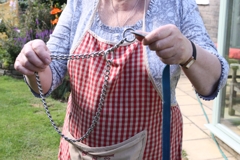
Give a short sharp jerk and relax, and the chain will loosen. If you've put it on upside down then the slack won't occur.
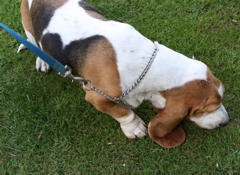
Buy the chain with the biggest links you can find: we had to look on eBay to get what we wanted. We have two hounds on a tandem lead, which makes it easier to control than trying to hold two leads. They have a set order: Moppet on the outside, Matilda next to me.
Conventional collars and leads are useless: they just develop stronger neck muscles.
- Post-op. If you should be unlucky to incur an operation then there is the perennial problem of how to stop your hound licking the wound. We consulted the group for advice and a number of suggestions were offered. See here for all the advice.
- Troubled with fleas? Is Frontline any good? In October 2013 I emailed all our group asking their opinion. Their replies are attached here.
- Anal glands. If you sense a pungent smell from your hound it is probably blocked anal glands. If you have a strong stomach all you need is one rubber glove, some vaseline and a clothes peg - for your nose. Otherwise your vet will squeeze them out in five minutes. If the problem persists he may suggest an op.
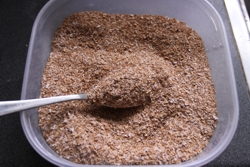
- As a close adjunct to that it can be helpful to add a large spoon of bran to the meal. The box shown below would hold about 30p's worth. Any good pet or horsey store will sell you a sack full.
- Coming into season? Bitches will come into their first season anywhere from, in our experience, seven months old to a year. If this is inconvenient your vet can give her a pill. Nearly all our hounds have been spayed around three months after the first season. Two reasons. We've had no interest in breeding from them - except for one from Dr Liz Andrews who we tried to mate with William a magnificent hound Best of Breed, but he turned out to be infertile. In season every dog in the neighbourhood will know, and call by, and spaying avoids the grievous ailment called pyometra.
- Pseudomonas is a serious bacterial skin condition that more usually affects hospitalised humans than hounds. (In humans a third of weakened immune patients can die from the infection). One of our group’s hounds became very ill with injections, swellings and obvious pain. Fortunately recovery has eventually occurred with treatment with injectable Baytril, Hibiscrub, probiotics and Zymox. The immune system may need building up using kefir probiotics.
- Bassets in old age. In September 2015 I circulated our group looking for advice on easing aching joints (yes I know, hounds not mine). The responses ranged from Yumove to Green Lipped Mussels. Previcox has also been recommended for arthritic joints. To see the full replies see the pdf here.
- Aggressive behaviour. The vast majority of our breed are calm and will give no trouble, but rarely we do come across one that doesn't fit the mould. This can be extremely distressing and worrying, particularly if you have children/grand-children in the family. The best advice we have come across is contained within the RSPCA guidance leaflet here.
- Sick Basset - stomach problems?
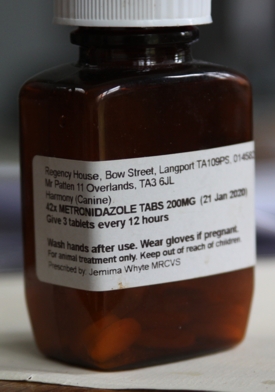
Loose stools can probably be cured by Metronidazole tablets which are very good for all sorts of stomach upsets. (Although the label says "three times a day" I find that invariably just one tablet will effect a cure.) Bad diarrhoea may be Giardia, a microscopic parasite and zootic disease (one that can be passed to humans: I've had it, not very pleasant) in which case Panacur is very good. (Also use for worming: available off eBay< don't need a prescription).Try Pro-Bind - available non-prescription from the vets - in beef flavour so very palatable!
L-Glutamine (non-essential amino acid) and Slippery Elm - both from Holland and Barrett.
One of our group’s hounds was diagnosed with probable haemangiosarcoma and was told he didn't have long to go 6 weeks ago (he is nearly 14), but this seems to have pulled him round. (From Becky Stanton)
- Glaucoma has sadly got into the breed and was one of the reasons the Kennel Club banned the breed from Crufts. We've had Bassets for over 50 years but never had any eye problems till our current eight year old Melody very suddenly revealed a problem in one eye: the third eyelid started closing. We treated her with Latanaprost, yes the identical eye drops used by humans, with three drops spread over a day + Loxicom as an anti-inflammatory. The pressure dropped from 90 to 60 but she soon lost the sight. Sadly the vet's prediction that there was a 50% chance that the other eye would go has proved correct, though I suspect he was being generous. After six months of first diagnosis she is virtually completely blind. Both her parents had the KC Glaucoma test but this is obviously far from foolproof. While there are a few canine eye specialists around they will be extremely expensive and results will be far from certain. I cannot recommend. Nearly two years on she has gone completely blind but the three drops a day has kept her out of pain and prevented the removal of her eyes. She copes surprisingly well sniffing round the house, but walks are inevitably mainly on a lead.
- To disguise wees and poos use Zoflora. Dilute 1: 40 and use in an old spray bottle. Cheap and effective.
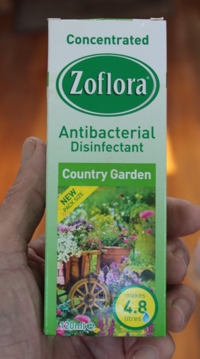
- A cheap tick treatment that works
I think we've all tried Frontline but it's a waste of money as far as I'm concerned. Last week I pulled ten ticks off our two in just one day, so here's what to do. I bought this small bottle of concentrated Citronella from my local health store for just £3. The dilution for massage says 5 drops per 10ml, so maybe you can get some from your local massage parlour, if you ask her nicely. I've used a 100ml plastic perfume bottle so have added 50 drops to the tap water. Then just dab it on a tissue and then on her head and neck (the Basset not the masseur). So far we've not had a single tick despite walking through many fields of long grass and sheep.
Basset Hound rules? (from Gay)
My daughter got me a fridge magnet with the following rules on:-
If I like it, it's mine.
If it's in my mouth, it's mine.
If I had it a little while ago, it's mine.
If I can take it from you, it's mine.
If you can't take it from me, it's mine.
If it looks like mine, it's mine.
If it's mine, it will NEVER be yours.
If I saw it first, it's mine.
If you have something
and put it down, it's mine.
If I chew something up,
all the pieces are mine.
(even the tiny little pieces)
If it used to be yours, get over it.
If it's broken, it's yours!
|
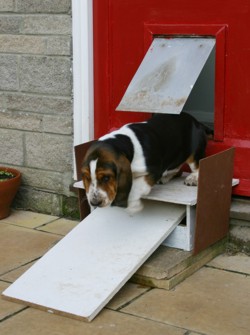
Don't let a young puppy jump down steps: their front leg joints are just too soft.
Training a puppy
Everyone will have their own ideas about puppy training, but for what it's worth here are ours that have worked OK for the last 50 years and nine Bassets. I can only speak about the Basset Hound, and with bitches: that's all we've ever had.
1 All dogs are different: certainly all Bassets are different: it's called character.
2 Try and get into a steady routine. Same time each day for the four meals a day. Bassets are creatures of habit. They know where they are then.
3 Buy a large cage pen with their own bed and spread newspaper around the floor. The pen will be so they can sleep at night and rest during the day. They know it's their home and you can get on with your work in safety. I wouldn't bother with a proper pet bed yet: just use old cardboard boxes as they will get chewed and can be replaced for nix.
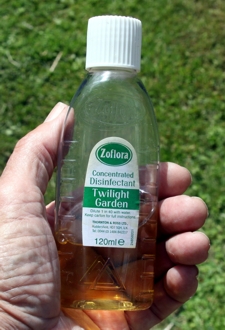
4 I reckon it will take around 10 days to house train an 8 week old puppy. Everything else is put to one side. Crack this - though there will be the odd accident - and life becomes a lot more pleasurable. After every meal and drink put them outside, no matter what the weather. Follow round the garden and lavishly praise when they perform. Repeat every hour. When they're in the house you will learn to watch them and spot when they're looking for somewhere to go. Never scold if you're too late: it's your fault not theirs. If you tell them off they'll be confused for performing a natural function. Clean up to hide the smell: Zoflora is very good (dilute 1:40) Watch, follow and praise.
3 Plenty of toys, preferably those that make a noise. Our Harmony at three still plays with an old plastic lemonade bottle that squeaks. Also empty plastic milk bottles with the lid screwed on tight which she wrenches off + the label. Plus old tennis balls - mine watched the Australian Open and has tried to catch the ball off the screen. Tug of wars with a rope etc.
4 Praise often, never hit of course. Plenty of cuddles and playing.
5 More important than the length of walks is to stop jumping on and off furniture, stairs etc. It's the front leg joints that take a 12 month to close. I would keep to running round the garden for a few months plus if you have a soft sand beach nearby. I wouldn't want to see a Basset walk more than a mile or two till after a year old.
6 You should be getting her used to a collar and lead, with just putting it on to get her used to it. Then gently lead her round the garden. When she's 6 - 9 months should be quite able to walk alongside you without tugging. Please don't go for one of those harnesses: you can't train a dog with a harness. For 50 years we've used a check chain and on a tandem lead as we have two - and they don't pull. Nothing worse than seeing a dog pulling its owner along the road.
7 Get him/her used to a car from a very early age. Sit her on your lap in the back seat and just do short journeys to start. Everything will be new, and maybe frightening for some. After a few journeys we've never had a car sick Basset. In extreme cases use half a tablet of Stugeron or similar.
8 A large marrow bone will keep him quiet and teeth shining. We now give them a boiled white bone from our pet shop at £1. No smell and keeps her quiet for an hour.
9 And socialise your new hound. Meet other dogs, let them run and play together in a safe place. Meet other people.
10. And finally, please learn to let your hound off the lead in open country. I've run Basset walks for more than 12 years and almost inevitably we've had new owners come along and refuse to let them off the lead: "they run away." Well maybe they will, but they'll come back. They always do. In 50+ years and nearly 150 Basset walks we've never lost a hound. The worst wait is if they disappear into maize or corn after a scent. Just be patient, whistle and call but they don't get lost. They''ll back track and find you so stay where they disappeared. Remember they're scent hounds. The alternative is a not very exciting life always being on a lead for the rest of heir lives: how would you like that? Trust them.
But most of all HAVE FUN. |
Having an op?
A perennial worry after an op is how to stop your hound gnawing the stitches. In June 2012 we asked your advice and they poured in. Click here to see the suggestions. |
Bassets can be trained |
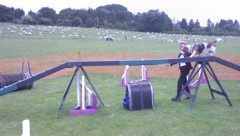
We are often asked "can Bassets be trained?" Well here is living proof that one at least can walk the plank – and all without a safety net, you will notice. (From Steve from Dorset with Maisie).
Leaving this aside, it shouldn't be too difficult to impart the standard "sit, stay", but anything more adventurous like "leave that cow-pat alone" or "keep your muddy feet off the sofa" demands more patience than we have.
As I write our Matilda has – again – climbed on the kitchen table, made herself comfortable, licked all the dishes, and levered off two precious soup bowls that have smashed on the floor. Well at least she's continuing the tradition of our previous hounds who have pinched fruit out of an even more memorable and expensive bowl, that also was fractured. Anybody want her?
But seriously, walking is no pleasure with a hound that always pulls. A lead and collar is no use. Use a choke, or more properly called a check chain, that should restrain with a sharp tug. With two hounds we swear by a split lead – easier to control than holding two leads in the hand. And make sure it is put on the right way, so that the weight loosens it automatically. Train to walk on the left. Our two always walk in the same position, Moppet on the outside, Matilda nearest me. They're creatures of habit, which is what hounds need. Confuse them with different commands and they won't know what you want. All they really want is to please.
Other do's and don'ts.
1 No tit-bits between meals, and no feeding from your table. (The only exception being a bribery biscuit on walks to encourage them to return on calling).
2 All scraps to be placed in their bowl
3 Never any chocolate: they get a liking for it and a large amount can cause fits or kill
4 Buy a "day-bed" to keep in the lounge which may, may, keep them off the furniture.
5 Only give marrow bones: chicken will splinter and keep the vets busy.
6 When puppies watch electric leads and other dangerous items that could be chewed.
|
Taking your hound abroad? Here's how to do it
Plan early. Our hounds can only go abroad with an Animal Health Certificate. This rigmarole came in after the disaster of Brexit. It is valid for one trip only unlike the old pet passports. It can only be obtained by an approved vet who will give a rabies jab, check the chip on your hound and issue the cert.
You should shop around as our normal vet of 30 years standing wanted to charge £205 for each hound on separate certificates. This is not necessary as the cert can take up to five. We found an excellent vet at Folkestone but more are springing up all the time.
(We have been told of another at Bradford on Avon who charges similar low rates. See Vee The Vet here.)
Rather than repeat what is on their website I can only add that it may also save money to buy the tapeworm tablets here on-line and hope that the foreign vet will administer them rather than try and sell you his own. (We bought Drocit by Bayer: 6 tablets for two hounds £15, though when we got home I found he'd only given one each!)
You can only really slip up if the vet fails to complete the simple form or forgets to use his rubber stamp. Make sure it's OK before you leave as Border Control may easily reject it at the Le Tunnel or ferry port.
If you want to discuss this please contact me.
|